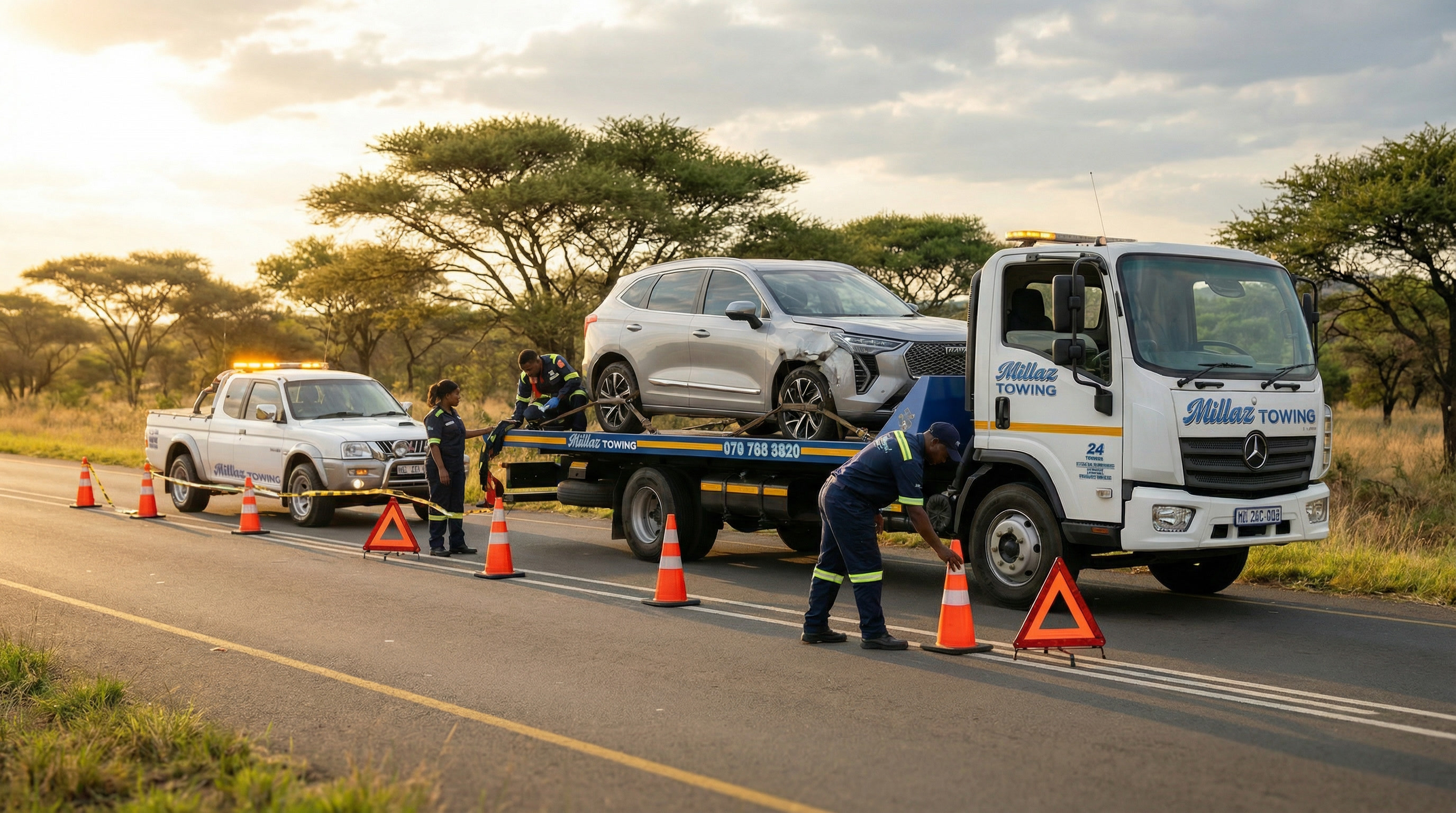
Whether you're a daily commuter on the N3 or navigating the roads around Pinetown and Westville, understanding towing regulations in KwaZulu-Natal is essential for every motorist. These regulations protect both drivers and towing operators, ensuring fair practices during stressful roadside situations.
Key Towing Regulations in KZN
The South African National Road Traffic Act outlines specific requirements for towing operations. In KZN, all towing companies must be registered and display valid operating licenses. When your vehicle breaks down or is involved in an accident, you have the right to choose your preferred towing service – no one can force you to use a specific provider.
Your Rights as a Motorist
You're entitled to a clear breakdown of towing costs before service begins. Towing operators must provide itemized invoices and cannot hold your vehicle hostage for payment disputes. Storage fees are regulated and must be reasonable. If you're on a major route like the N3 or M13, traffic authorities may designate specific towing zones, but your choice of provider remains protected.
What to Expect During a Tow
Professional towing services like Millaz Towing follow strict protocols. Operators should present identification, explain the towing process, document your vehicle's condition, and provide you with contact information for vehicle retrieval. Always ask for estimated costs and timeframes upfront.
Dispute Resolution
If you encounter issues with a towing service, the Road Traffic Management Corporation (RTMC) handles complaints. Keep all documentation, including invoices and communications. Reputable companies maintain transparent practices and work to resolve concerns quickly.
For emergency towing services in the Pinetown, Westville, Hillcrest, and Kloof areas, having a trusted provider's contact information saved can save valuable time. Stay informed, know your rights, and drive safely on KZN's roads.
Share this article


