The first 15 minutes following a road accident are the most critical. Your actions during this brief window can mean the difference between a manageable situation and a catastrophic outcome. Whether you're involved in a minor fender-bender in Westville or a serious collision on the N3, mastering these protocols ensures driver safety, protects vehicle integrity, and establishes the foundation for insurance and legal processes.
Minutes 1-3: Immediate Safety Assessment
The moment impact occurs, your brain floods with adrenaline. Fight the urge to panic. Take three deep breaths, then immediately assess the situation. Are you injured? Can you move? Check yourself first – you cannot help others if you're incapacitated. Check all passengers systematically, starting with children and elderly occupants.
Quickly evaluate your vehicle's position. Are you in active traffic lanes? Is there smoke or fuel leaking? Can you see clearly around your vehicle? This 60-second assessment determines your next critical decisions.
Minutes 3-5: Secure the Scene
If your vehicle is drivable and you're in a dangerous position (highway lane, blind curve, intersection), move it immediately to the shoulder or nearest safe area. Turn off the engine and activate hazard lights. This is not about preserving evidence – it's about preventing secondary collisions that cause more injuries and fatalities than initial accidents.
If you cannot move your vehicle safely, everyone should remain inside with seatbelts fastened, especially on high-speed roads like the N3 or M13. Modern vehicles provide significant protection during secondary impacts. Standing on a highway shoulder or in traffic is exponentially more dangerous.
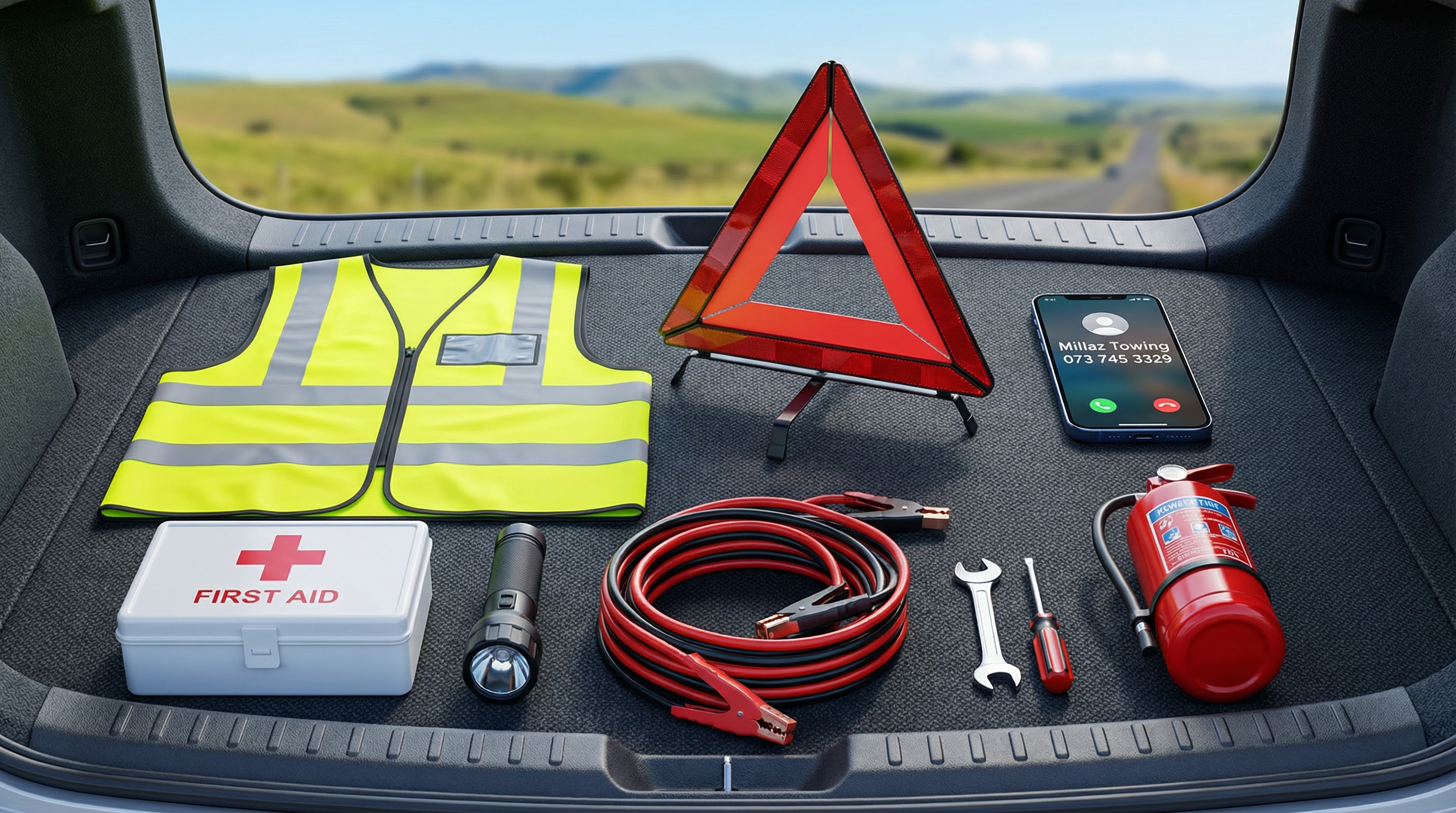
Deploy warning triangles or reflectors at least 45 meters (approximately 50 large steps) behind your vehicle on the same side of the road. On highways, increase this to 100 meters. If visibility is poor due to weather, curves, or hills, place warnings even further back.
Minutes 5-8: Emergency Communications
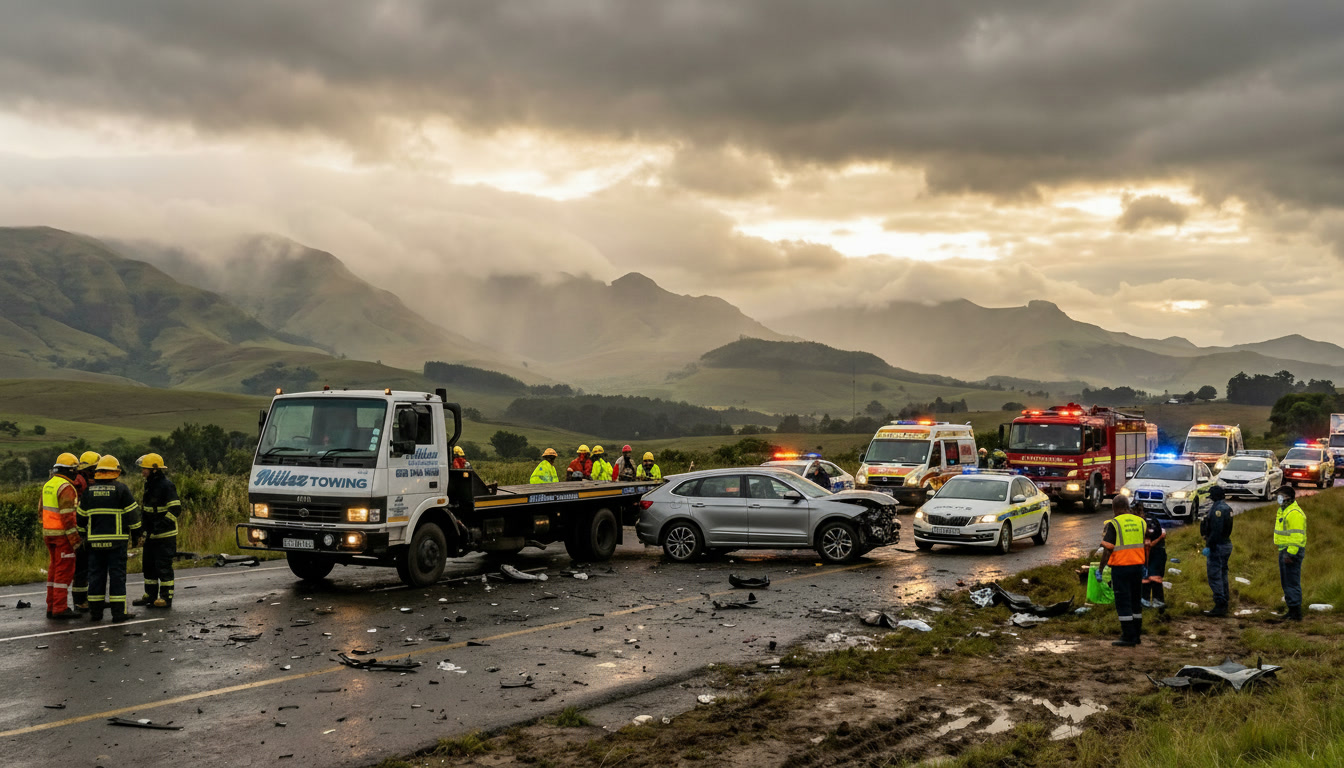
Contact emergency services immediately if anyone is injured, vehicles are blocking traffic, or hazardous materials are involved. Dial 10177 (national emergency) or 112 from your mobile phone. Provide clear, calm information: exact location (use highway markers, GPS coordinates, or landmarks), number of vehicles involved, injuries, and any immediate dangers (fire, fuel spills, trapped occupants).
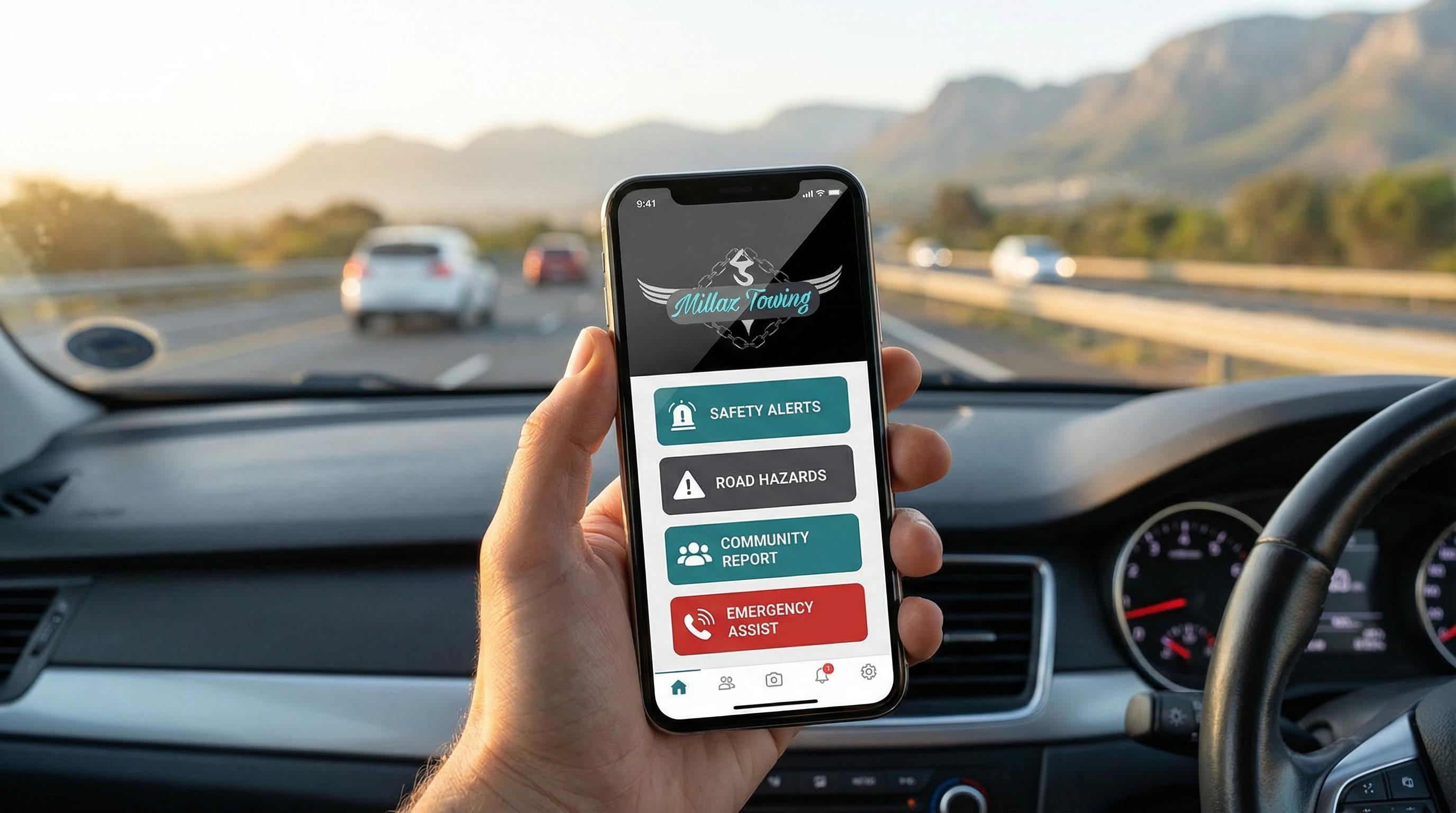
This is where technology becomes your ally. The Millaz Towing Spotter App allows you to report accidents with a single tap, automatically transmitting your GPS location and dispatching the nearest response team. First reporters even receive compensation for their rapid response – turning witnesses into heroes who help secure KZN's roads.
Minutes 8-12: Medical Triage
If trained in first aid, check injured persons systematically. Do not move anyone unless they're in immediate danger (fire, traffic). Moving injured people can worsen spinal injuries or internal trauma. Keep injured persons warm, calm, and still until medical professionals arrive.
Watch for signs of shock: pale skin, rapid breathing, confusion, or loss of consciousness. Shock can be life-threatening and may not appear immediately. Anyone exhibiting shock symptoms needs urgent medical attention.
Minutes 12-15: Evidence Documentation
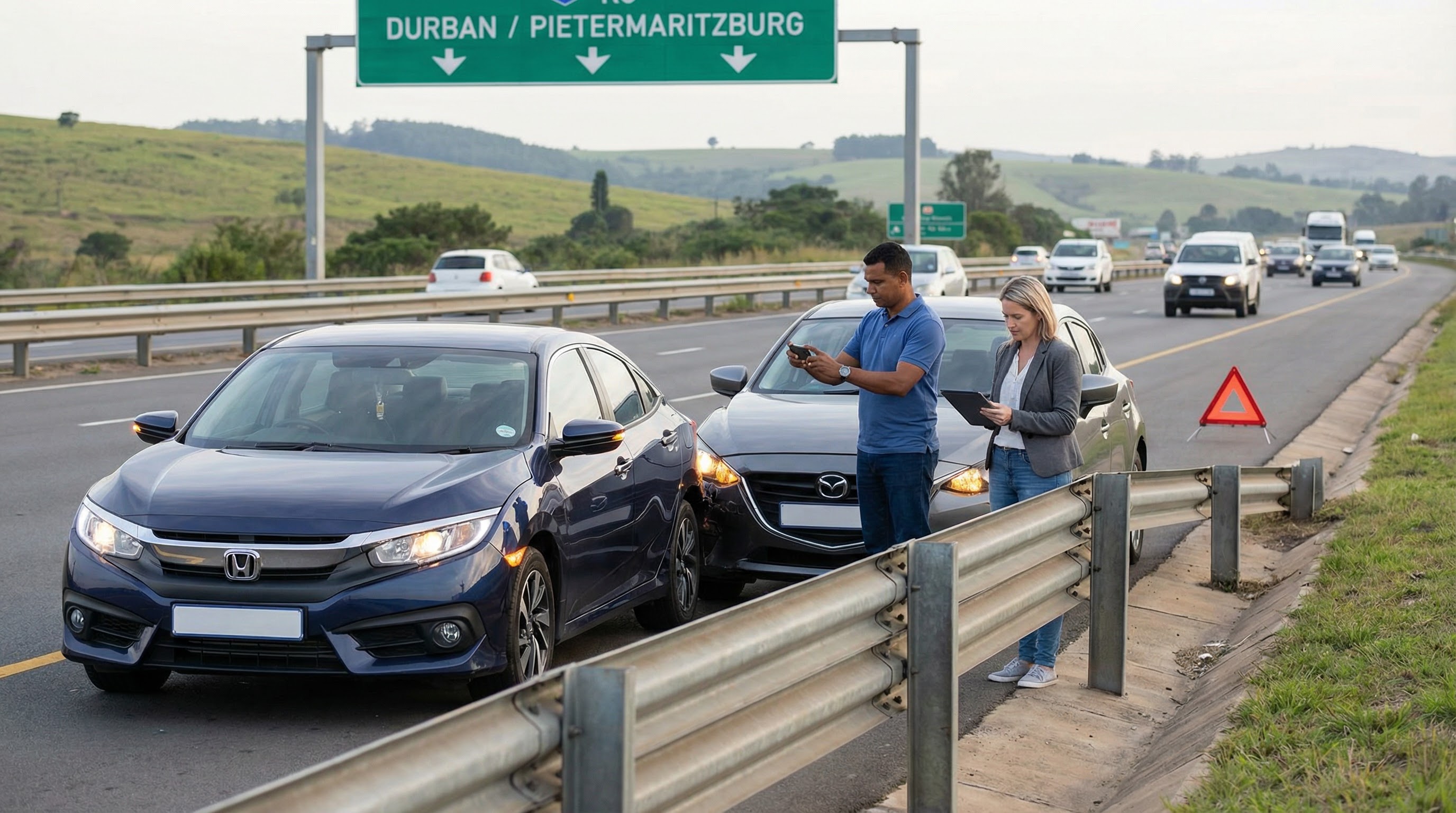
Once safety is secured and emergency services are contacted, begin documenting the scene. This evidence is crucial for insurance claims and potential legal proceedings.
Photograph everything from multiple angles:
- All vehicles involved (four sides of each vehicle)
- Damage close-ups
- License plates clearly visible
- Street signs, traffic signals, and road markings
- Skid marks, debris patterns, and fluid spills
- Weather and road conditions
- Vehicle positions relative to road features
Information Exchange
Exchange essential information with all involved parties:
- Full names and contact numbers
- Driver's license numbers
- Vehicle registration and license plates
- Insurance company names and policy numbers
- Vehicle make, model, and color
Write down witness names and contact information. Witnesses often leave quickly, and their statements can be invaluable later.
Critical Don'ts
Don't admit fault – even if you believe you caused the accident. Say "I'm sorry this happened," not "I'm sorry I caused this." Official fault determination involves many factors you may not understand in the moment.
Don't sign anything except official police or emergency documents. Never sign blank forms or documents you haven't read thoroughly.
Don't leave the scene until all official procedures are complete, unless medical emergencies require it. Leaving prematurely can result in criminal charges.
The Bottom Line
The first 15 minutes after an accident set the trajectory for everything that follows. Mastering these critical protocols protects lives, preserves evidence, and ensures you receive the support you need. Stay calm, follow the sequence, and remember that professional help – whether emergency services, insurance providers, or trusted towing companies like Millaz Towing – is there to support you through the process.
Share this article